Defense use cases for mixed unmanned fleets
Eight missions to scope with your platforms and C2.
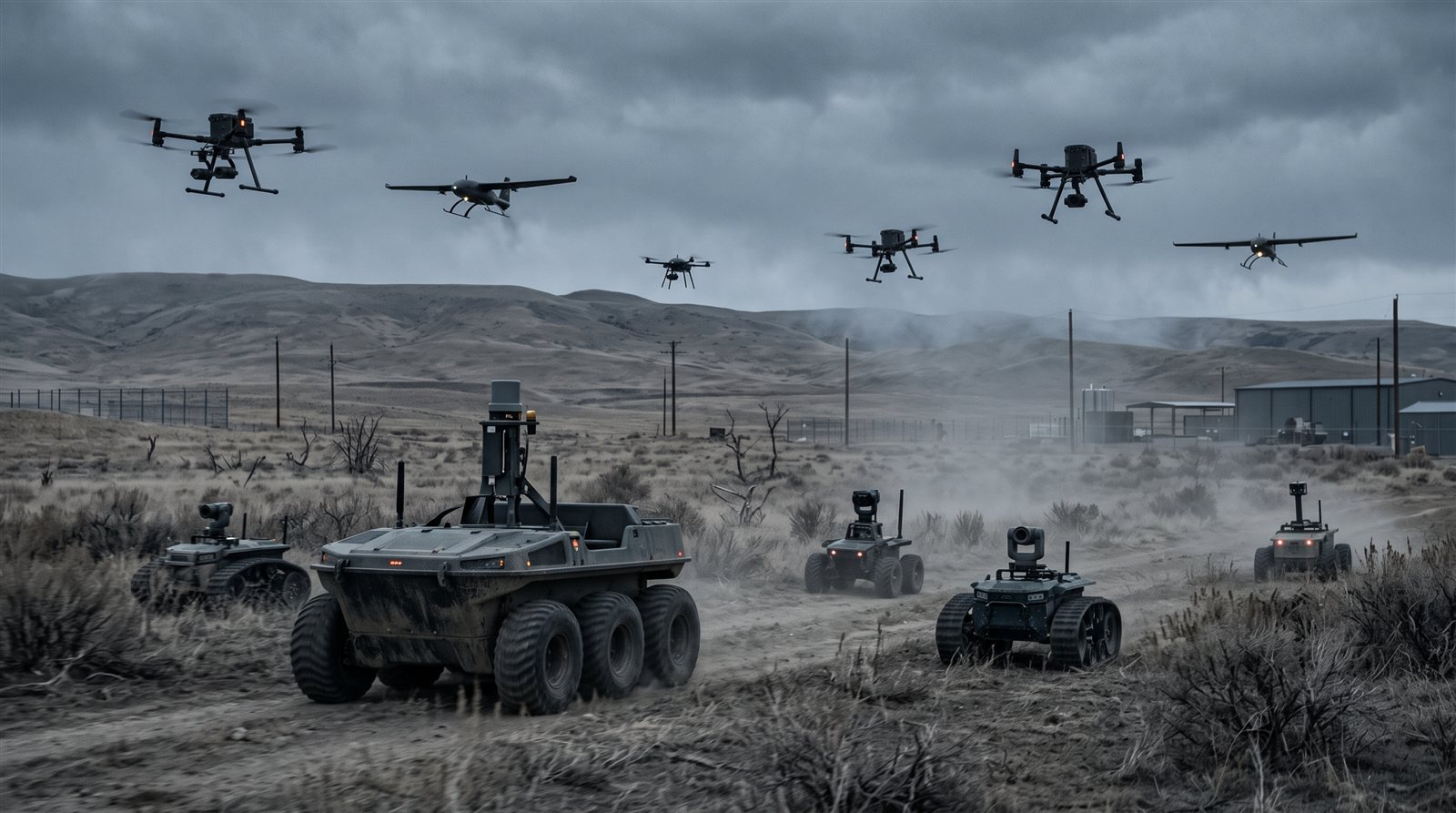
Each use case shows how a mission layer could coordinate vendor-agnostic UAVs, UGVs, USVs and sensors. Feasibility, interfaces and performance need to be evaluated for your environment.
Use cases
Select a use case to see how it could work.
Choose a card to jump to the detailed scenario, its workflow and the points to evaluate.
Natural language tasking
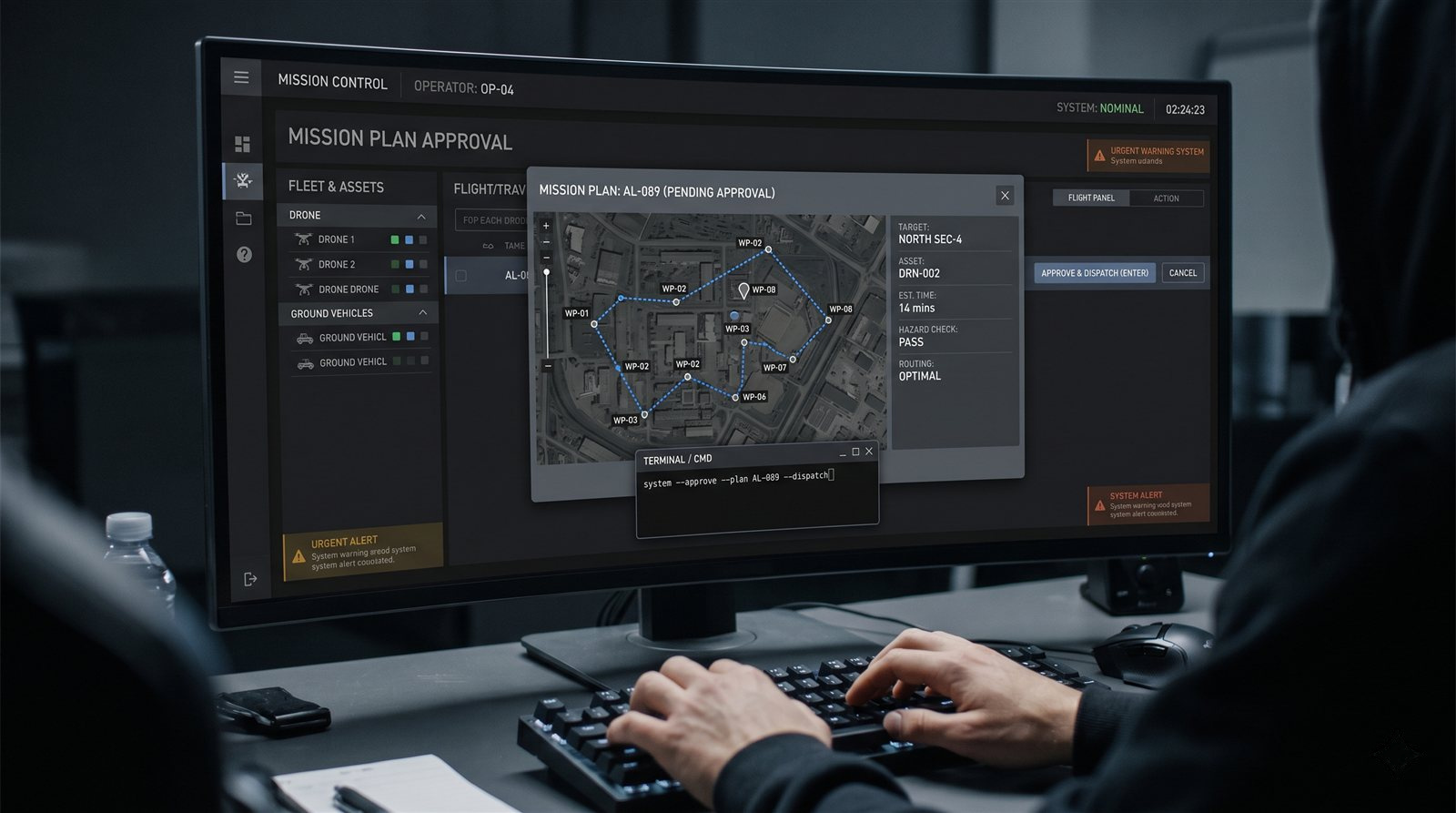
Turn a plain instruction into a planned mission that an operator approves.
View details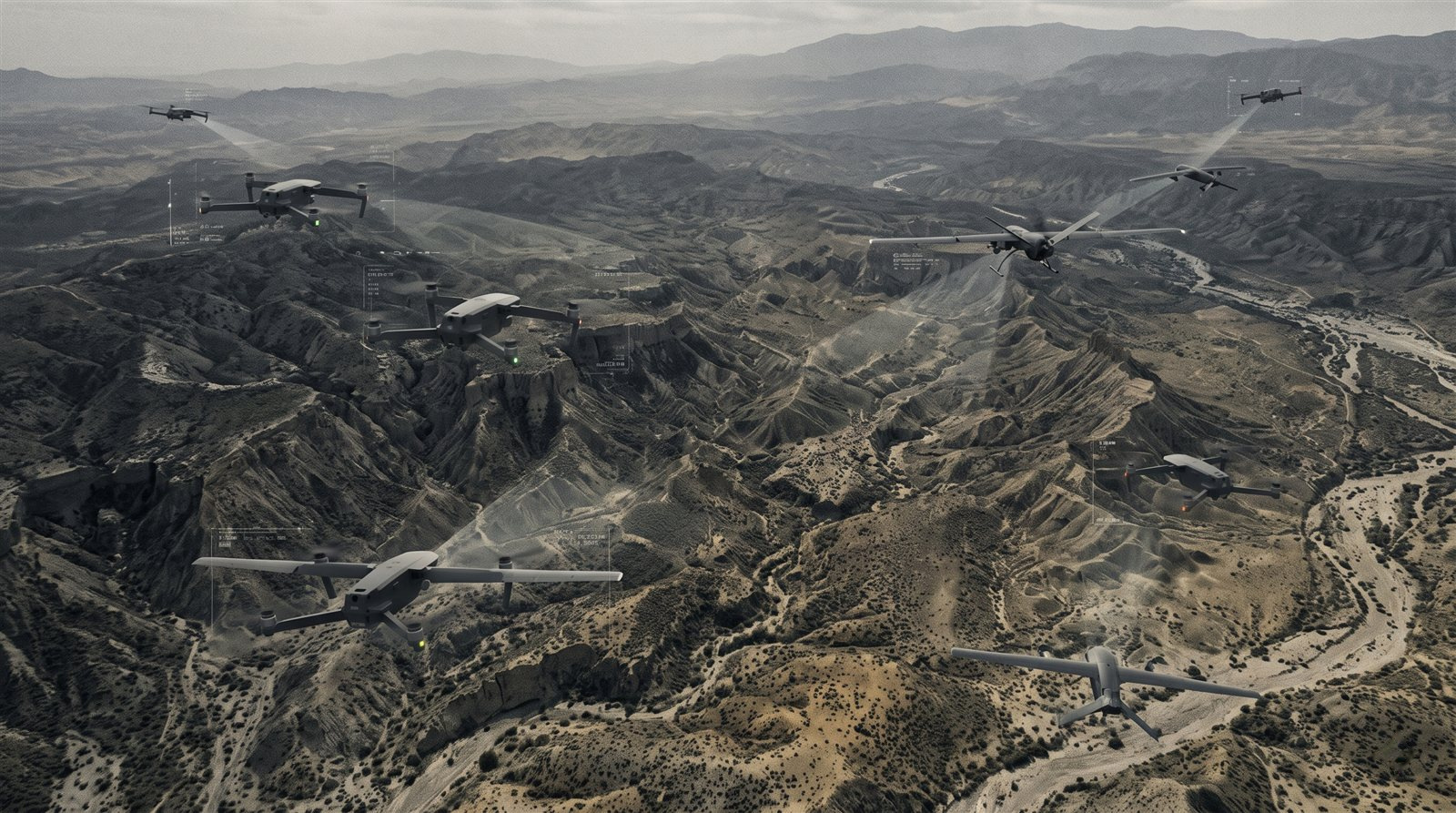
Wide-area ISR
Split a search area across several UAVs and combine the results into one picture.
View details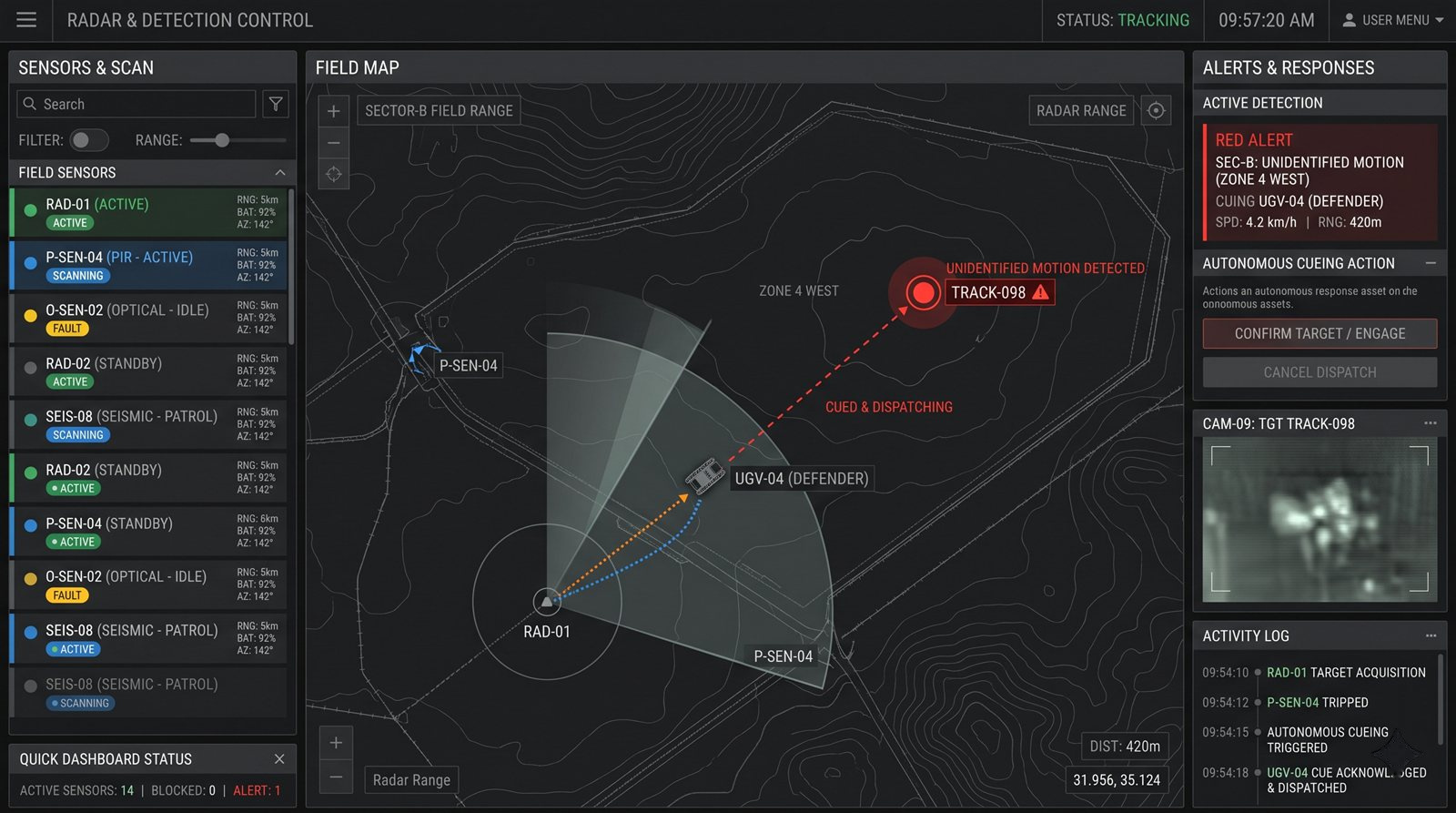
Sensor-to-effector cueing
Let a sensor event start an authorised, operator-reviewed response.
View details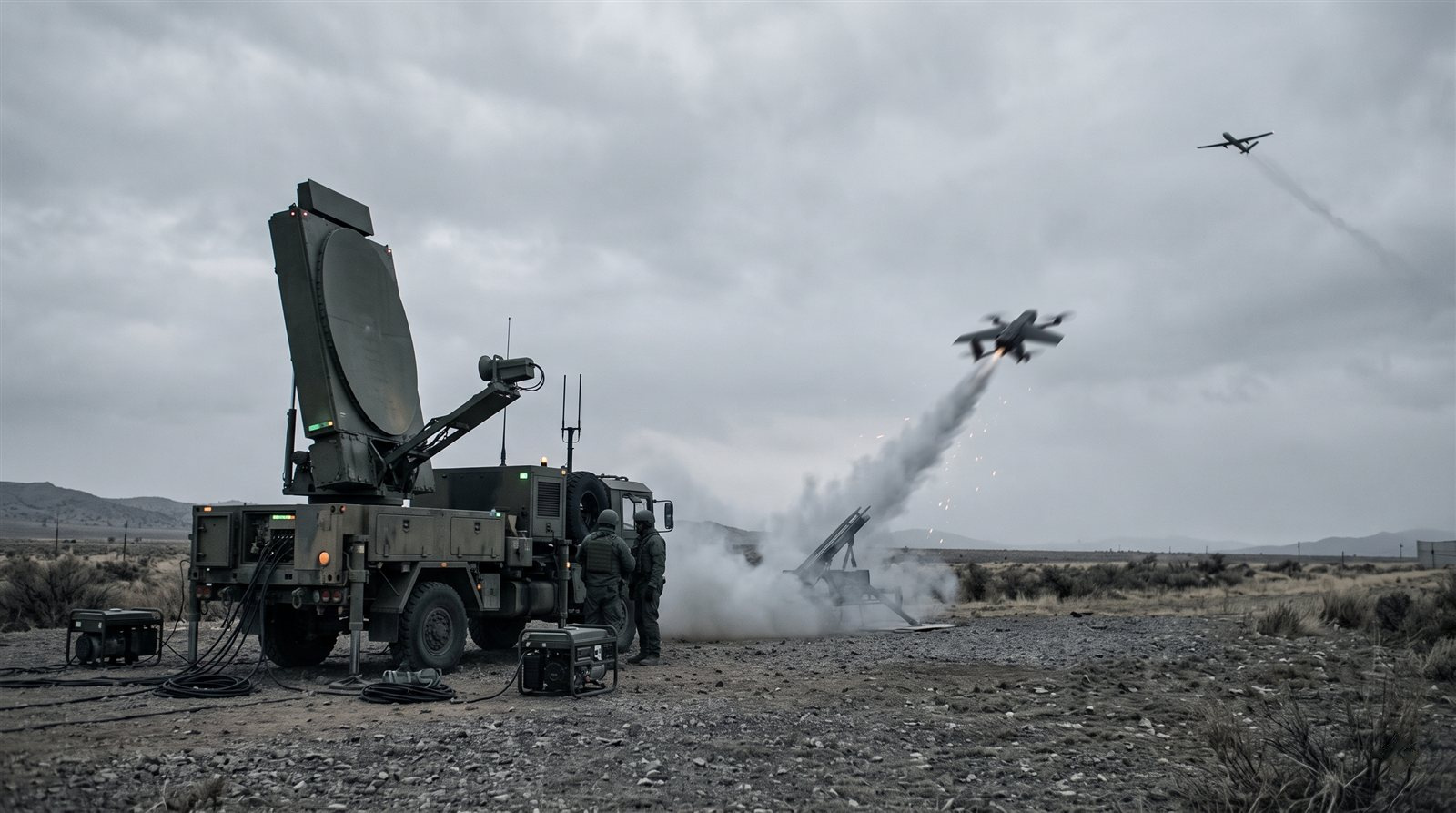
Layered counter-UAS
Coordinate sensors and interceptors to detect, track and respond.
View details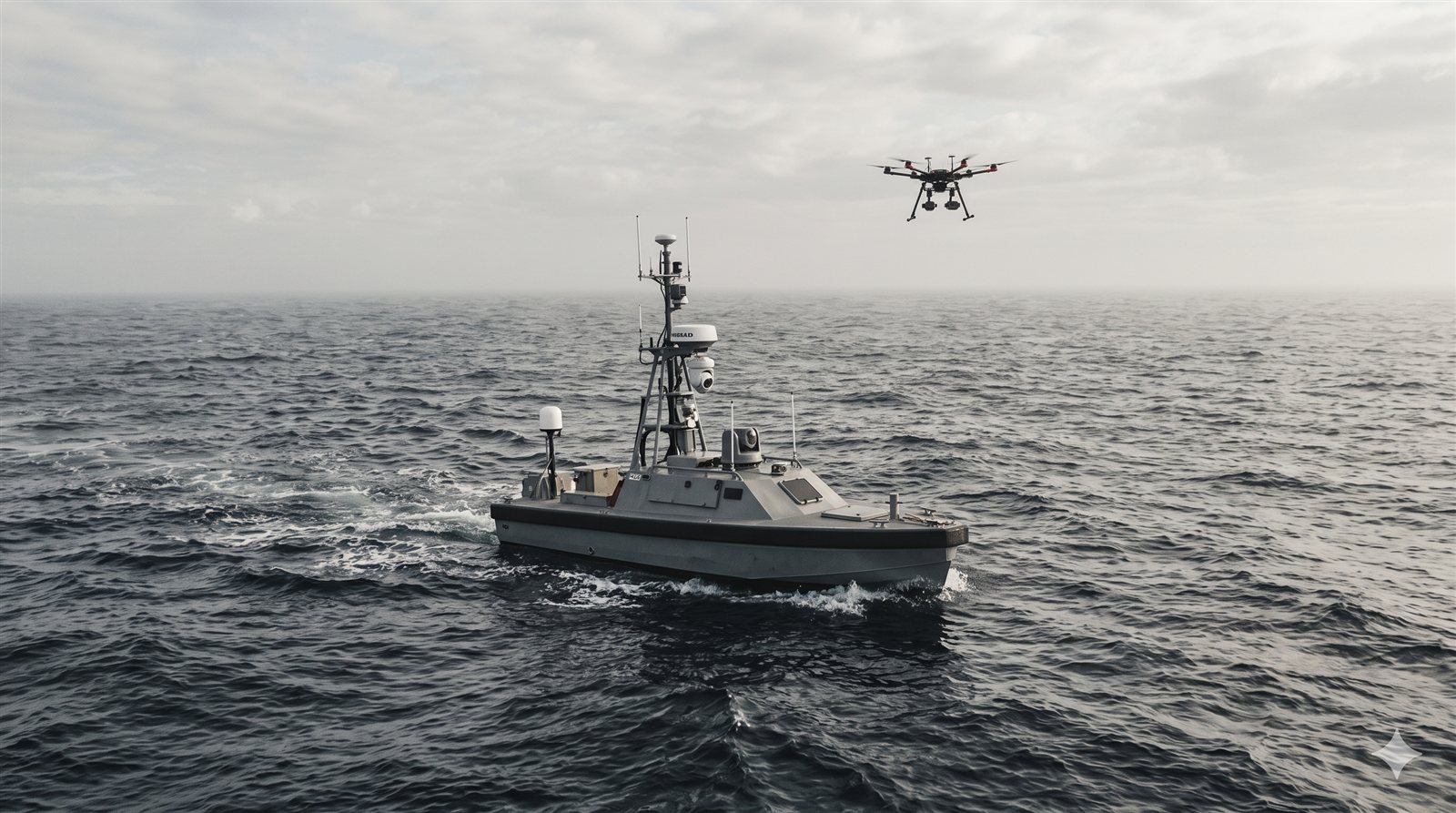
USV and UAV teaming
Run joint surface and air missions such as patrol, escort and surveillance.
View details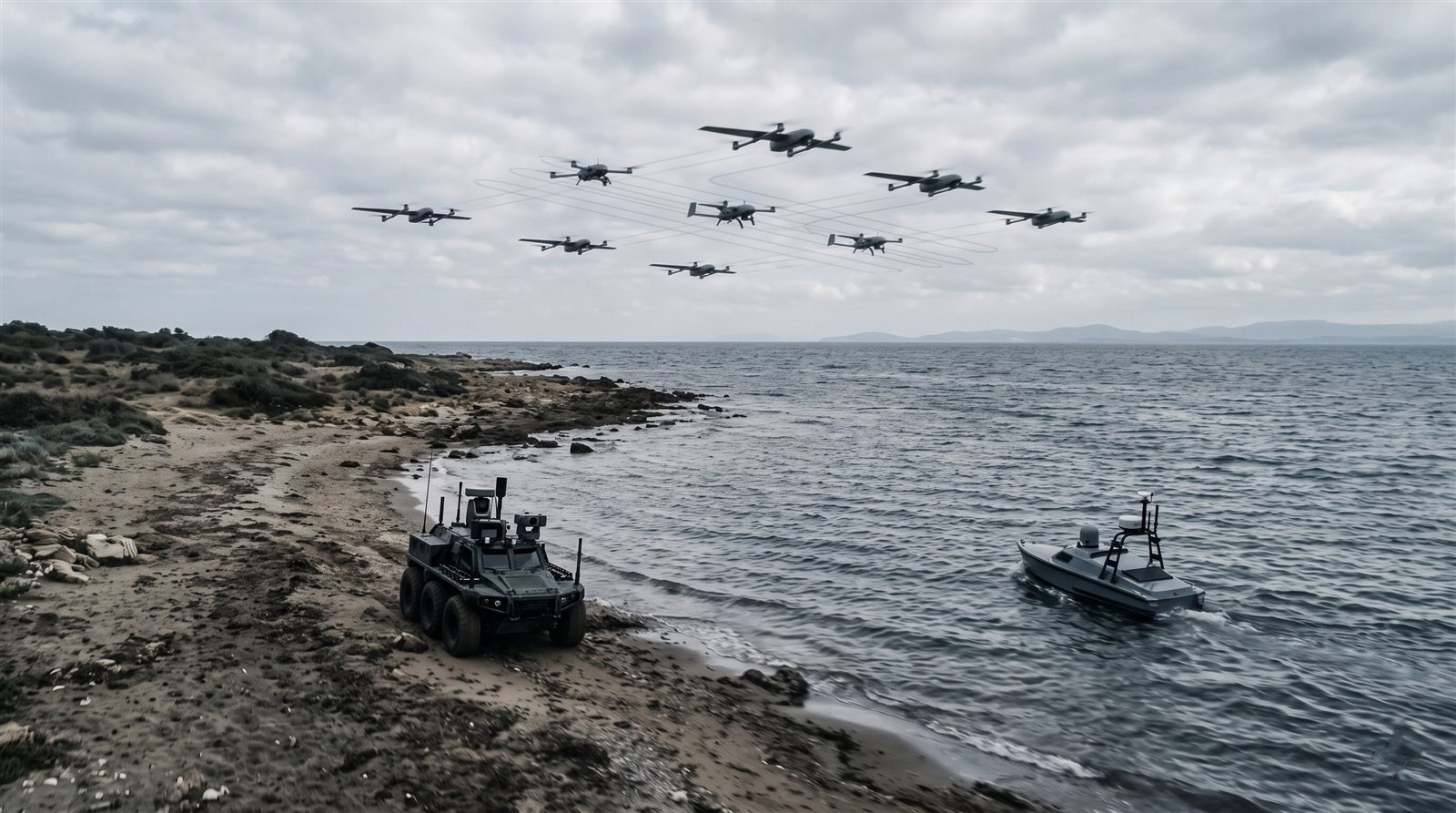
Swarming and teaming
Coordinate a mixed fleet of UAVs, UGVs and USVs as one team.
View details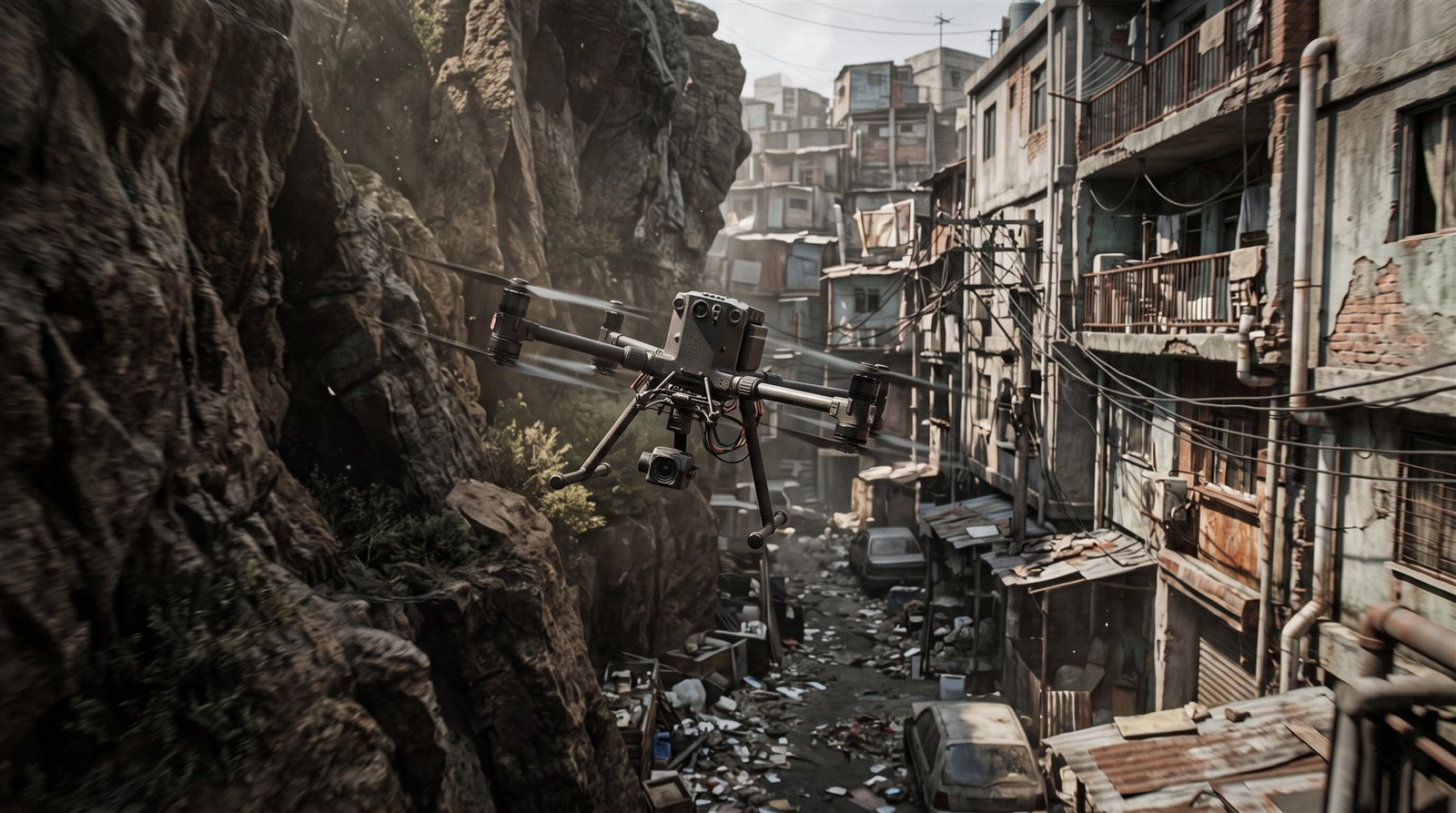
GNSS-denied navigation
Explore navigation requirements for contested environments.
View details
Embedded in prime C2
Add a mission layer inside an existing C2 or GCS, with no new console.
View details/01Command
Natural language tasking
Challenge
Each platform has its own console, so tasking a mixed fleet needs operators trained on several interfaces.
How Omokai could help
Omokai interprets an instruction such as "Go to Sector A and recon the area around the bridge", matches eligible assets by capability and proposes a plan for approval before dispatch.
Workflow
- 1Understand the objective
- 2Match assets by capability
- 3Operator approves the plan
- 4Execute, verify and log
Points to evaluate
- Supported platforms and interfaces
- Approval points and limits for the test scenario
- Voice or text input requirements
/02Air
Wide-area ISR
Challenge
Covering a large area with several UAV types means separate flight plans, separate feeds and manual merging of results.
How Omokai could help
Omokai divides the area across eligible aircraft, tracks progress and returns the combined findings to the C2 for operator review.
Workflow
- 1Define the area and objective
- 2Divide coverage across assets
- 3Monitor progress and re-plan
- 4Merge findings for review
Points to evaluate
- Aircraft and sensor interfaces
- Re-planning behavior when an asset drops out
- Format of results returned to the C2
/03Strike support
Sensor-to-effector cueing
Challenge
Detections and responding assets live in different systems, so cueing between them depends on manual handoffs.
How Omokai could help
When a sensor flags an event, Omokai proposes suitable assets for the operator to approve. Which assets and effects are in scope is defined with the customer.
Workflow
- 1Sensor event received
- 2Omokai proposes assets
- 3Operator approves
- 4Outcome verified and logged
Points to evaluate
- Compatibility between selected vendors
- Authorisation and rules-of-engagement controls
- Latency requirements for your scenario
/04Air defense
Layered counter-UAS
Challenge
Radars, optical sensors and interceptors from different makers rarely share a common tasking layer.
How Omokai could help
Omokai treats sensors and responders as capabilities in one registry so the detect, track and respond loop can be scoped as a single mission.
Workflow
- 1Detect with available sensors
- 2Track and classify
- 3Propose a response
- 4Operator-approved action
Points to evaluate
- Sensor and interceptor interfaces
- Handover timing between layers
- Human authority and logging coverage
/05Maritime
USV and UAV teaming
Challenge
Surface and air vehicles are usually operated separately, with little shared planning.
How Omokai could help
Omokai plans a joint mission across vehicles so an aerial asset can extend what a surface vessel can see, and the reverse.
Workflow
- 1Define patrol or escort area
- 2Assign USV and UAV roles
- 3Coordinate and re-plan
- 4Report to the C2
Points to evaluate
- USV and UAV control interfaces
- Communications range and loss behavior
- Handover between vehicles
/06Fleet
Swarming and teaming
Challenge
Today one operator typically controls one machine, so adding machines does not increase the missions a team can run.
How Omokai could help
The swarm capability pack coordinates assets from different vendors on a single mission, for the whole fleet or selected machines.
Workflow
- 1Select the assets in scope
- 2Enable the swarm pack
- 3Coordinate and re-plan on failure
- 4Review the outcome
Points to evaluate
- Fleet size and vendor mix
- Failure scenarios to test
- Operator span of control
/07Navigation
GNSS-denied navigation
Challenge
Jamming and spoofing can degrade satellite navigation, which many platforms rely on.
How Omokai could help
GNSS-denied navigation is an optional capability pack. Mission completion in jammed or spoofed conditions is not a verified capability and must be evaluated per platform.
Workflow
- 1Define the contested conditions
- 2Select supported platforms
- 3Run the agreed test scenario
- 4Review results
Points to evaluate
- Platform sensors and onboard autonomy
- Test environment and acceptance criteria
- Fallback behavior
/08Integration
Embedded in prime C2
Challenge
Every new vendor becomes a custom integration project, and primes cannot easily offer multi-vendor fleets.
How Omokai could help
Omokai Embedded runs headless inside the prime's C2. Each vendor is integrated once through an adapter, and capability packs are switched on per mission or machine.
Workflow
- 1Plug into the existing C2
- 2Connect vendors via adapters
- 3Extend with capability packs
- 4Keep the operator workflow
Points to evaluate
- C2 / GCS interface documentation
- Integration effort per vendor
- Data location and access
Discuss a defense use case with us.
Tell us which platforms and C2 system you run so we can discuss feasibility, scope and acceptance criteria.